Micronutrientsసూక్ష్మ పోషకాలుसूक्ष्म पोषक तत्व · 6 min readనిమిషాల పఠనంमिनट पढ़ें
Boron for Flowering and Fruit Set: Why Small Amounts Make a Big Difference
Boron is needed in tiny quantities, yet without it flowers fail to set fruit. This guide explains when and how to apply it.
పూత, కాయ కట్టడానికి బోరాన్: కొద్ది మోతాదు పెద్ద తేడా ఎందుకు
బోరాన్ చాలా తక్కువ మోతాదులో కావాలి, అయినా అది లేకపోతే పూత కాయగా మారదు. ఎప్పుడు, ఎలా వేయాలో ఈ గైడ్ వివరిస్తుంది.
फूल और फल लगने के लिए बोरॉन: थोड़ी मात्रा बड़ा फर्क क्यों डालती है
बोरॉन बहुत कम मात्रा में चाहिए, फिर भी इसके बिना फूल फल नहीं बन पाते. यह गाइड बताती है कि कब और कैसे डालें.
Byరచన:लेखक: Navamitraa Agri Tech · Publishedప్రచురణप्रकाशित · Updatedనవీకరణअपडेट
ఈ వ్యాసం ప్రస్తుతం ఇంగ్లీష్లో మాత్రమే అందుబాటులో ఉంది.
यह लेख फिलहाल केवल अंग्रेज़ी में उपलब्ध है।
Key takeawaysముఖ్యాంశాలుमुख्य बातें
- Boron supports pollen germination, flowering, seed and fruit set.
- It does not move easily inside the plant, so new growth shows symptoms first.
- Label guidance: spray 30 days after germination or transplanting and again after 20-30 days.
- Use 1.0-1.5 g per litre of water with a sticker-spreader.
- Too much boron is toxic, so never exceed the dose.
What does boron do in the plant?
- Supports cell wall strength and growth of new tissue.
- Helps pollen germination and pollen tube growth.
- Improves seed, fruit set and fruit quality.
- Helps movement of sugars inside the plant.
Signs of boron deficiency
Symptoms to watch for
- Growing tips become thick, brittle and distorted.
- Flowers drop or fail to set fruit.
- Fruits may crack or become misshapen.
- Short internodes and a bushy, stunted look.
Crops that need extra attention
Cotton, chilli, tomato, groundnut, vegetables, citrus, mango and flowers are known to respond to boron when soil is low.
When and how to apply boron
Timing as per the product label
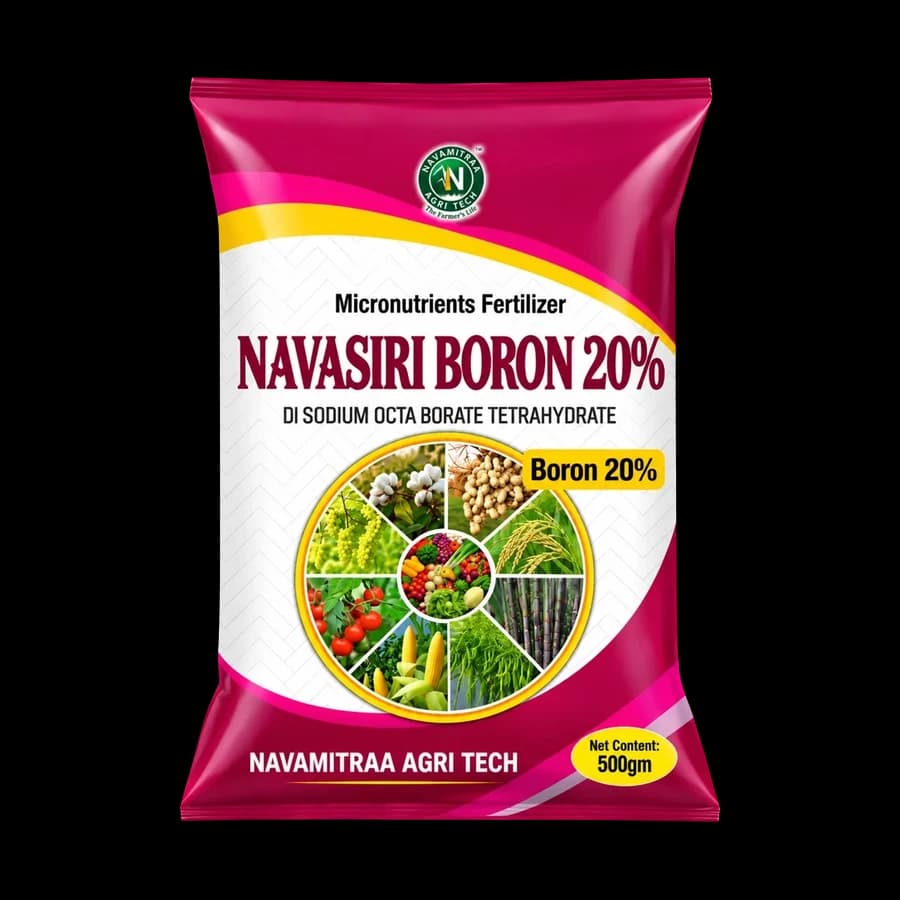
Navasiri Boron 20% is sprayed 30 days after germination or transplanting, and repeated after 20-30 days. The label dose is 1.0-1.5 g per litre of water, with a sticker-spreader added.
Safe-use tips
- Boron has a narrow safe range between deficiency and toxicity.
- Measure carefully and do not combine with other boron sources on the same day.
- Spray in the cool part of the day.
Boron together with other nutrients
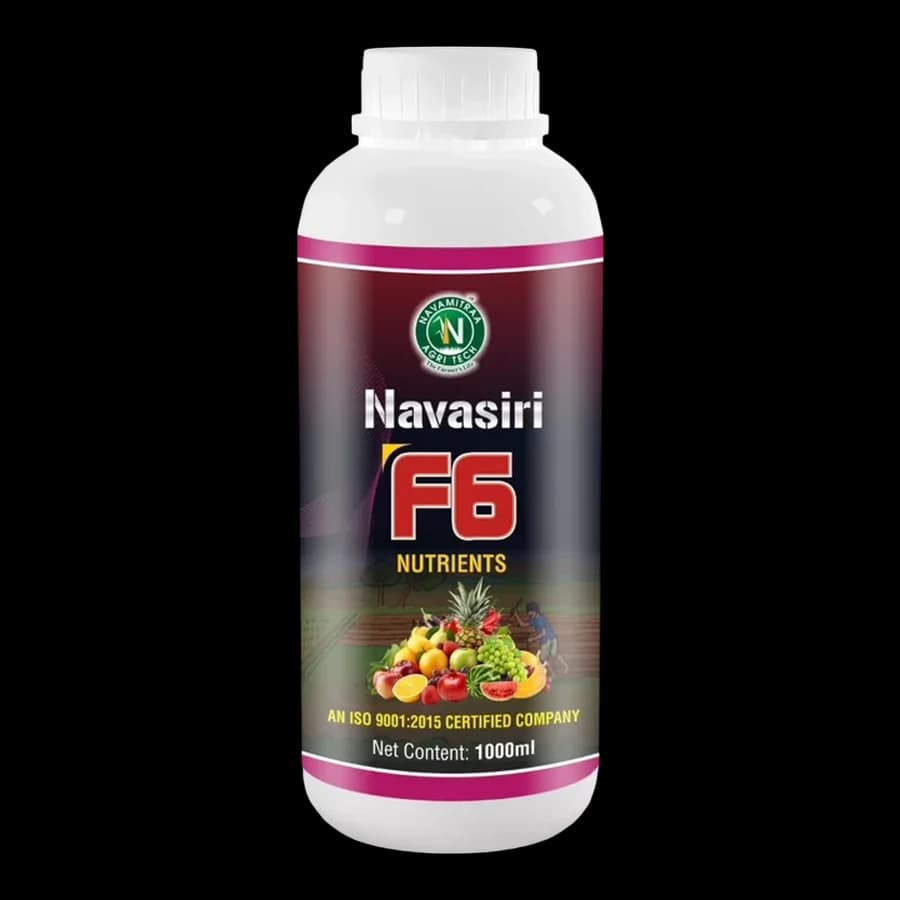
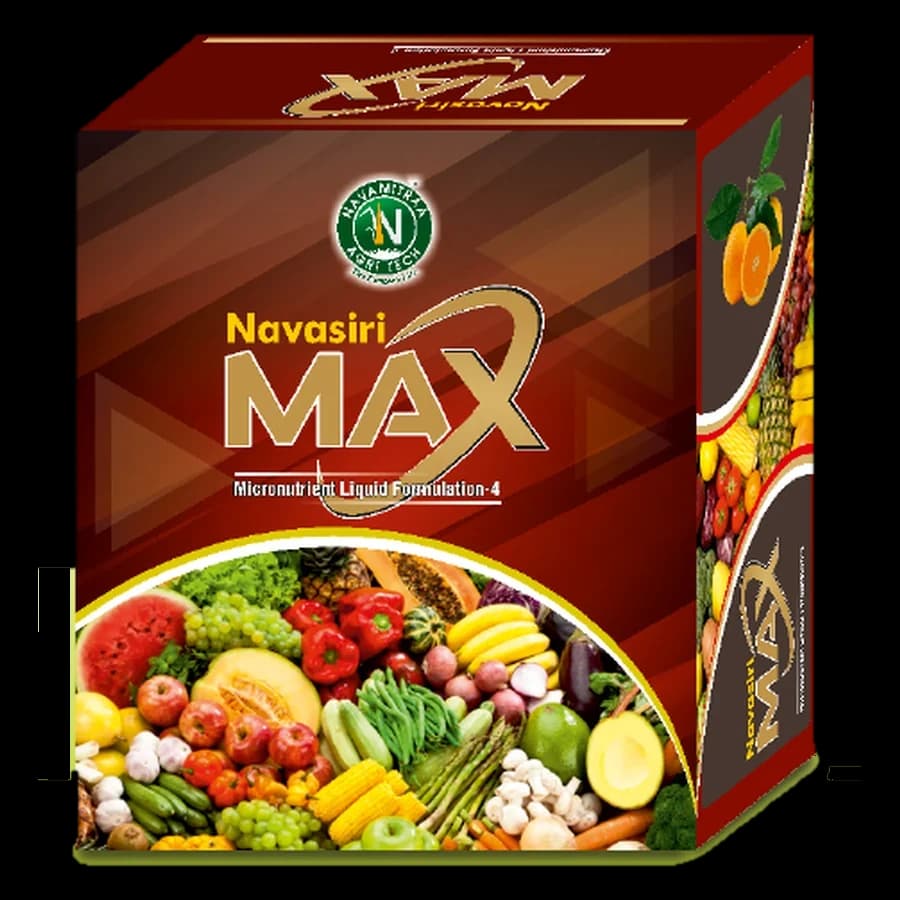
Boron works with calcium and zinc for flowering and fruit quality. Where several nutrients are short, a micronutrient mixture such as Navasiri F6 or Navasiri Max can cover trace-element gaps, with boron added at the flowering stage.
FAQs: Boron for Flowering and Fruit Set
Can I apply boron to the soil instead of spraying?
Soil boron is sometimes used, but because the safe range is narrow, small errors in dose can harm the crop. For farmers, a measured foliar spray at the label dose is easier to control. Always follow the label and your agriculture officer's recommendation.
What happens if I apply too much boron?
Excess boron burns leaf edges and tips, causing yellowing followed by brown scorching, and can lower yield. Do not increase the dose to get faster results. If you suspect overdose, irrigate lightly and contact your agriculture officer.
Is boron needed in every crop?
Boron response is strongest in crops that have high flowering and fruiting demand and in soils that are sandy, acidic or low in organic matter. A soil test is the best way to know whether your field needs it.
Key takeawaysముఖ్యాంశాలుमुख्य बातें
- Boron supports pollen germination, flowering, seed and fruit set.
- It does not move easily inside the plant, so new growth shows symptoms first.
- Label guidance: spray 30 days after germination or transplanting and again after 20-30 days.
- Use 1.0-1.5 g per litre of water with a sticker-spreader.
- Too much boron is toxic, so never exceed the dose.
What does boron do in the plant?
- Supports cell wall strength and growth of new tissue.
- Helps pollen germination and pollen tube growth.
- Improves seed, fruit set and fruit quality.
- Helps movement of sugars inside the plant.
Signs of boron deficiency
Symptoms to watch for
- Growing tips become thick, brittle and distorted.
- Flowers drop or fail to set fruit.
- Fruits may crack or become misshapen.
- Short internodes and a bushy, stunted look.
Crops that need extra attention
Cotton, chilli, tomato, groundnut, vegetables, citrus, mango and flowers are known to respond to boron when soil is low.
When and how to apply boron
Timing as per the product label
Navasiri Boron 20% is sprayed 30 days after germination or transplanting, and repeated after 20-30 days. The label dose is 1.0-1.5 g per litre of water, with a sticker-spreader added.
Safe-use tips
- Boron has a narrow safe range between deficiency and toxicity.
- Measure carefully and do not combine with other boron sources on the same day.
- Spray in the cool part of the day.
Boron together with other nutrients
Boron works with calcium and zinc for flowering and fruit quality. Where several nutrients are short, a micronutrient mixture such as Navasiri F6 or Navasiri Max can cover trace-element gaps, with boron added at the flowering stage.
Frequently asked questionsతరచుగా అడిగే ప్రశ్నలుअक्सर पूछे जाने वाले प्रश्न
Can I apply boron to the soil instead of spraying?
Soil boron is sometimes used, but because the safe range is narrow, small errors in dose can harm the crop. For farmers, a measured foliar spray at the label dose is easier to control. Always follow the label and your agriculture officer's recommendation.
What happens if I apply too much boron?
Excess boron burns leaf edges and tips, causing yellowing followed by brown scorching, and can lower yield. Do not increase the dose to get faster results. If you suspect overdose, irrigate lightly and contact your agriculture officer.
Is boron needed in every crop?
Boron response is strongest in crops that have high flowering and fruiting demand and in soils that are sandy, acidic or low in organic matter. A soil test is the best way to know whether your field needs it.
This article is for general education. Results depend on crop, soil, weather and management. Follow the product label and consult your local agriculture officer or KVK before changing your nutrient plan.ఈ వ్యాసం సాధారణ అవగాహన కోసం మాత్రమే. ఫలితాలు పంట, నేల, వాతావరణం, నిర్వహణపై ఆధారపడతాయి. పోషక ప్రణాళిక మార్చే ముందు ఉత్పత్తి లేబుల్ పాటించండి, స్థానిక వ్యవసాయ అధికారి లేదా KVKని సంప్రదించండి.यह लेख सामान्य जानकारी के लिए है। नतीजे फसल, मिट्टी, मौसम और प्रबंधन पर निर्भर करते हैं। पोषण योजना बदलने से पहले उत्पाद का लेबल देखें और अपने स्थानीय कृषि अधिकारी या KVK से सलाह लें।